AI: Actually Insightful? Or Awaiting Implosion?
Artificial intelligence has become impossible to ignore. Over the past year in particular, the term AI has exploded into every corner of technology and software. It appeared in product descriptions, sales pitches, social media posts and boardroom conversations. Everything suddenly claimed to be powered by AI. There were AI assistants, AI content tools, AI analytics platforms and somehow even an AI toaster. Yes, really.
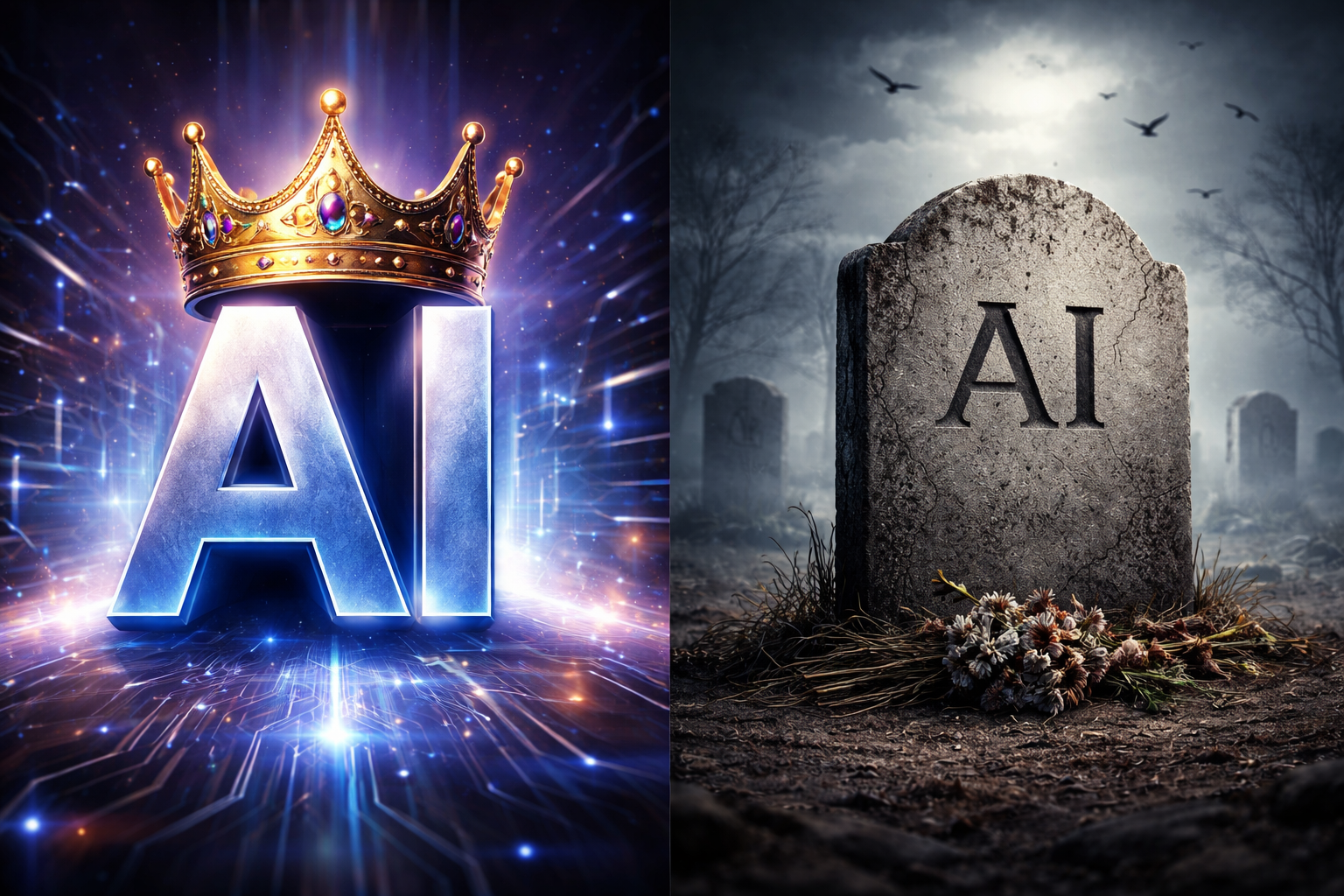
At first, it felt exciting. Revolutionary, even. But as the noise grew louder, a quieter question began to form underneath it all. Has it gone too far. And more importantly, is this something that is built to last, or are we watching the early stages of an implosion?
To answer that, we need to separate genuine value from empty labelling.
The real value of AI
At its best, AI is not a gimmick. It is a powerful tool for insight. When used thoughtfully, it helps people see patterns they could not see before. It processes vast amounts of information quickly, reduces repetitive effort and allows humans to focus on higher value thinking.
In society more broadly, AI has already shown its worth. It supports medical research, improves accessibility, assists with language translation and helps organisations make more informed decisions. The common thread is augmentation. AI works best when it enhances human capability rather than attempting to replace it.
It gives us time back. Time to think, to create, to connect and to make better judgements.
The impact on accounting
Nowhere is this clearer than in accounting. The industry has long been weighed down by manual processes, tight deadlines and an ever increasing compliance burden. AI, when applied properly, does not remove the accountant from the equation. Instead, it removes the friction.
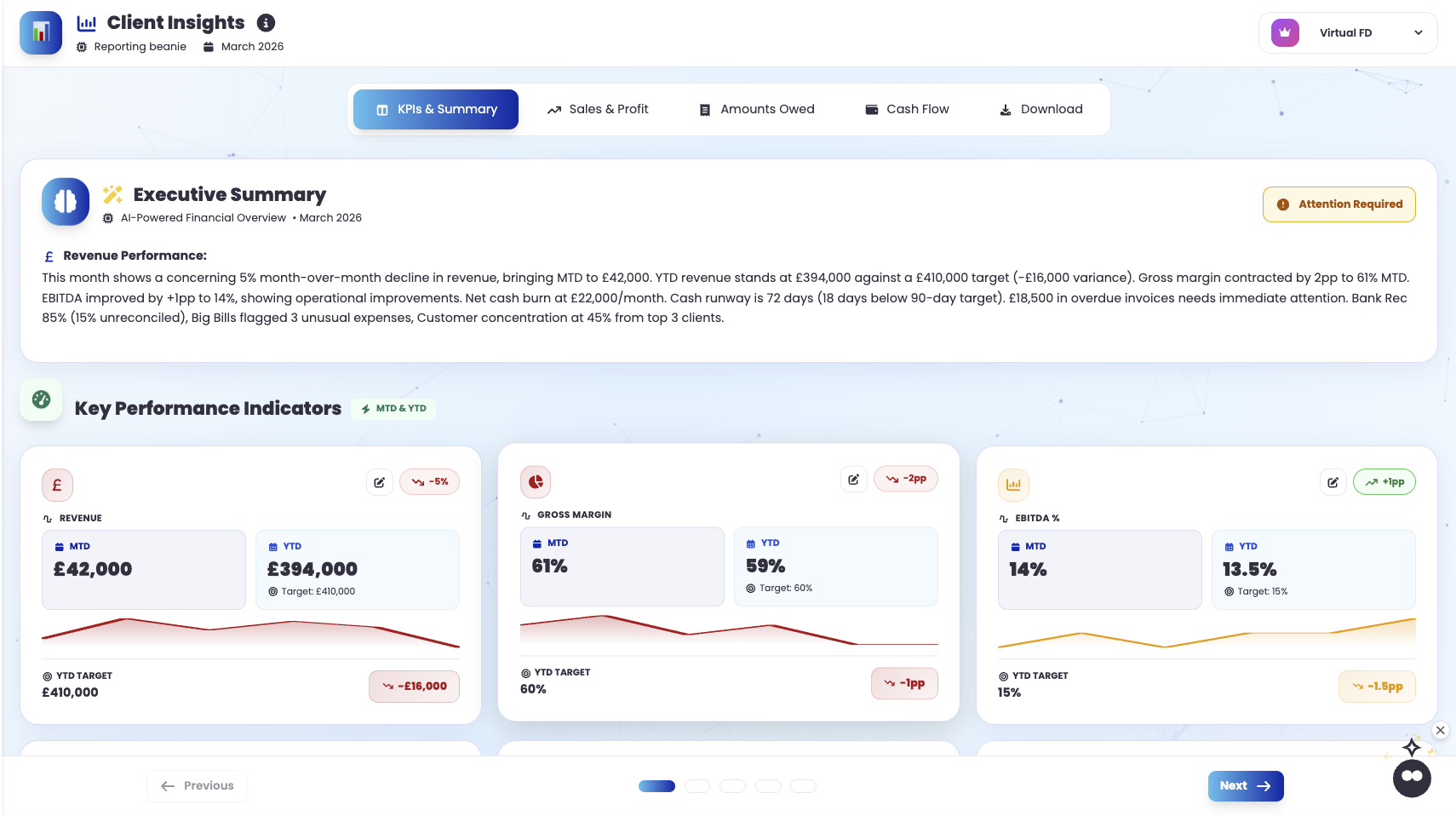
Tasks such as data extraction, categorisation, reconciliation and monitoring can be handled faster and more consistently. This reduces errors, improves visibility and allows accountants to shift their focus towards advisory work and client relationships. The kind of work that requires judgement, context and trust.
For accountants, AI is not about replacing expertise. It is about protecting it. By reducing the noise, it allows professionals to operate at their best.
When AI becomes too much
The problem is that somewhere along the way, the AI label became a marketing shortcut. It was added to products that did not need it, did not benefit from it and in some cases actively suffered because of it.
We do not need AI everywhere.
AI and creative expression should not collide. Sure, it can be used to generate a handy image now and again, but no matter how advanced a model becomes, it cannot replicate human emotion, lived experience or vulnerability. A piece of writing, music or art that moves us does so because it reflects something deeply human. That is not a dataset. That is a life.
AI and human conversation should also remain separate. When people reach out to customer service, they want to be heard. They want empathy and understanding, not a bot misunderstanding their question for the third time in a row. Efficiency is valuable, but not at the expense of connection.
And no one asked for an AI toaster. Come on now.
The question of AI folding in on itself
There is another concern quietly growing beneath the surface. As more AI generated content fills the internet, the source material that models learn from becomes increasingly synthetic. AI systems do not truly learn from themselves. They remix, predict and replicate patterns from existing human created content.
If the internet becomes saturated with AI generated material, the quality and originality of future outputs may decline. In certain areas, AI risks creating a closed loop, feeding on its own reflections. In that sense, parts of AI driven content creation may eventually collapse under their own weight.
That said, not all AI is exposed to this risk. Tools that operate within defined systems, structured data and real world workflows are not dependent on open internet content. Automation platforms and purpose built AI products, such as Bots for That or Zapier, are grounded in practical execution. They solve specific problems and are not learning from an endless stream of online noise.
A future that requires restraint
AI is not inherently good or bad. It is a tool. Like any powerful tool, its impact depends on how and where it is used.
In some areas, it is already transforming industries for the better. In others, it has become a source of confusion, mistrust and even fear. The rise of AI generated images, videos and unofficial news content has blurred the line between what is real and what is fabricated. When we can no longer trust what we see, that is unsettling.
As a company that creates AI products, we are not blind to these concerns. We think about them constantly. What we build is something we are deeply proud of, because we know it has benefited and continues to benefit accounting practices in meaningful ways.
But that does not mean we believe AI belongs everywhere.
The goal is not to make humans redundant. The goal is to make human work more valuable. To remove the unnecessary so that skill, judgement and creativity can thrive.
AI does not need to dominate every space to be successful. In fact, its long term survival may depend on knowing when to step back.