When Firms Merge, Systems Should Not Clash
Mergers and acquisitions are becoming an increasingly common growth strategy for accounting firms. Scale brings opportunity, but it also brings complexity. As highlighted in AccountingWEB’s article When systems collide: the post acquisition tech stack, one of the biggest challenges firms face after a merger is not people or clients, but technology.
Too often, newly merged firms inherit a patchwork of systems. Different bookkeeping tools. Different reporting platforms. Different workflows layered on top of one another. The intention is usually sensible. Keep everything running, migrate data gradually, and avoid disruption. In reality, this approach creates a new problem. Managing the technology becomes a job in itself.
As Simon Woodhams notes in the article, “That way, there’s one source of truth, and everything follows after that.” This insight cuts straight to the heart of the issue. Without a single source of truth, firms are left reconciling systems rather than serving clients.

The hidden cost of multiple tools
When firms attempt to merge data across multiple tools, they are not just moving numbers. They are trying to align processes, permissions, reporting logic, and expectations. Each additional system increases the risk of duplication, inconsistency, and manual intervention.
What begins as a technical migration quickly turns into an operational drain. Teams spend hours checking data matches across platforms. Leaders struggle to get a clear view of performance. Reporting becomes fragmented. Confidence in the numbers starts to slip.
This is where many acquisitions quietly lose momentum. Growth was the goal, but the internal burden slows everything down.
Why one platform beats many
The most effective post acquisition strategy is not to merge systems, but to simplify them. Migrating into one platform removes the need to constantly translate between tools. It creates consistency across teams and clients from day one.
One platform means one set of workflows. One reporting logic. One place to train staff. One environment where data lives and decisions are made.
It also means firms can move forward together, rather than operating as multiple businesses under one name.
Enter the beanieverse
This is where the beanieverse becomes directly relevant to the conversation raised in the article.
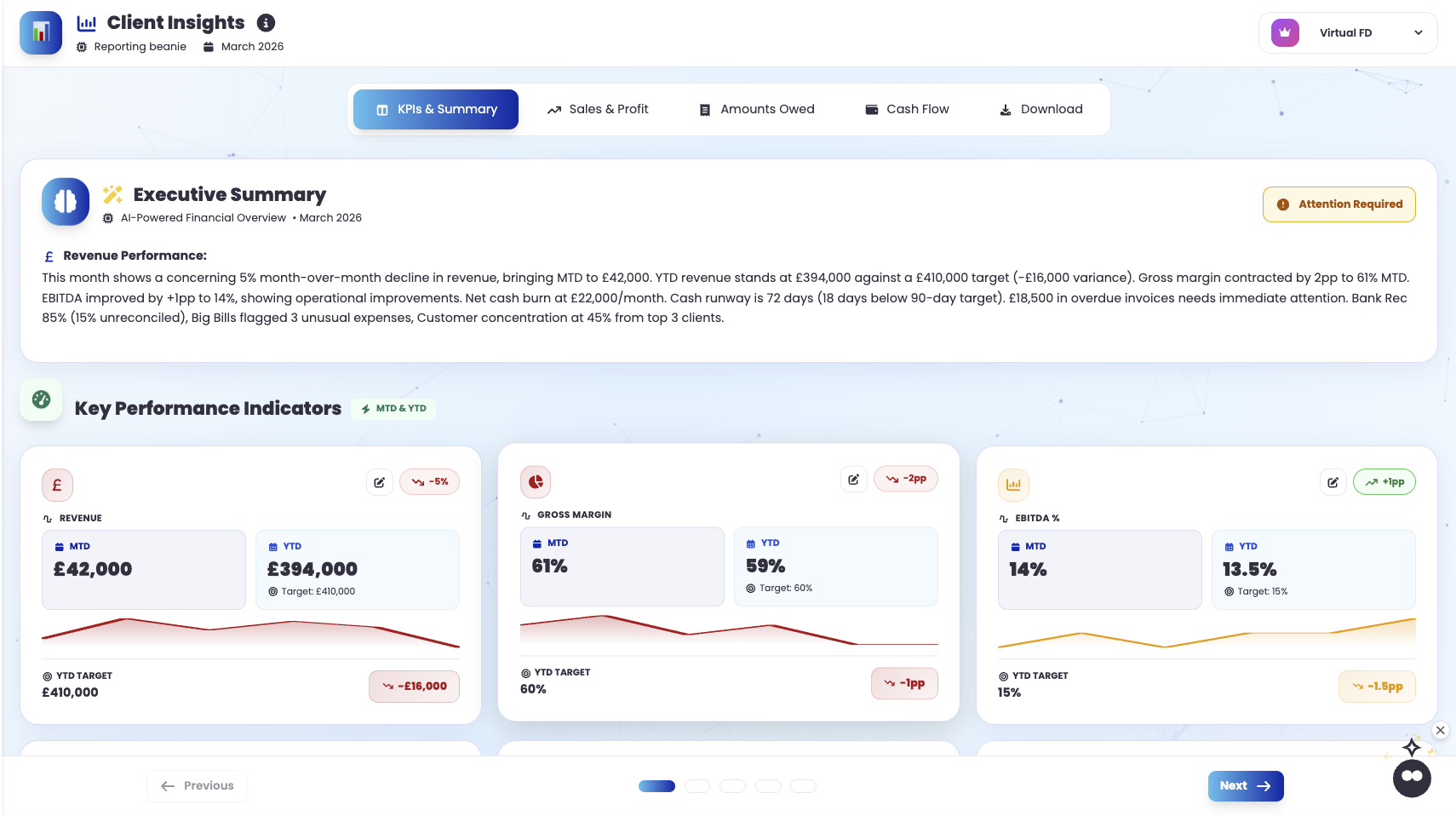
The beanieverse is designed to be that single source of truth. A centralised platform where every AI tool accountants could need is standardised and brought into one place. Instead of stitching together disconnected systems, firms operate within one control centre built specifically for modern accounting practices.
Reporting, reconciliation, insights, notifications and AI driven support all live within the same environment. Data flows consistently across the platform. There is no need to duplicate effort or reconcile outputs from multiple tools.
In the context of growth through acquisition, this matters more than ever.
A Growth ready foundation
Firms planning to grow through acquisition need technology that scales with them. Not just in size, but in complexity. The beanieverse provides a foundation where new firms, new clients and new teams can be brought in without reinventing the wheel every time.
Instead of asking how to connect systems after the fact, firms can ask a better question. How do we bring everyone into the same way of working from the start?
By acting as the one source of truth, the beanieverse allows firms to focus on integration, culture and client value rather than firefighting data issues.
Growth should feel simpler, not heavier
Mergers should create momentum, not friction. The article rightly highlights the risks of system collision after acquisition. The solution is not better workarounds, but better structure.
When everything lives in one place, everything follows after that.
For firms serious about growth through acquisition, the beanieverse is not just relevant. It is the strategic choice that turns complexity into clarity, and ambition into sustainable progress. Get in touch with our team to find out more.
Read the full AccountingWEB Article here!