Where 30% of Your Team’s Time Is Quietly Disappearing
There’s a silent problem sitting inside most accounting firms. It doesn’t appear on a P&L, it isn’t called out in leadership meetings, and it rarely feels urgent enough to challenge. But it’s there all the same — quietly draining time, energy and potential.
And it’s costing far more than most firms realise.

The Comfort of “How It’s Always Been”
It’s human nature to feel comfortable with familiar processes. When something has always been done a certain way, it feels safe to assume that changing it would introduce risk, disruption or unnecessary complexity. If it works, why touch it?
But accounting doesn’t stand still. Regulations evolve, client expectations rise, competition intensifies, and the pressure on margins grows heavier each year. At the same time, the expectations of your team are shifting too. People want progression, purpose and meaningful work — not just volume.
Yet many firms are still operating on processes designed for a very different era.
That’s where the real tension begins.
The Busyness Illusion
One of the most persistent misconceptions in accounting is the belief that busyness equals productivity. When diaries are full, inboxes are overflowing and teams are constantly working to the next deadline, it feels like momentum. It feels like progress.
But busyness and progress are not the same thing.
Look beneath the surface of a typical week and you’ll find hours absorbed by manual checking, chasing clients for missing information, reworking tasks because data was incomplete or inaccurate, and switching between disconnected systems that were never designed to speak to each other. Each task, on its own, feels small and manageable. Together, they form a pattern that quietly consumes up to 30% of your team’s working time.
More importantly, they chip away at morale.
Talented accountants don’t leave because the profession is challenging; they leave because too much of their day is spent on repetitive, frustrating work that adds little visible value. Over time, that frustration compounds, and what once felt like a career begins to feel like a treadmill.
The Next 18 Months Will Not Be Gentle
Here’s the reality: accounting is about to change faster than many firms are prepared for. AI is no longer experimental and automation is no longer a competitive advantage reserved for early adopters — it is becoming the baseline expectation. Clients increasingly demand faster responses, clearer insights and proactive advice, while top talent expects their skills to be used in ways that stretch and develop them.
In this environment, standing still is not neutral. Firms that adapt will build confidence and momentum. Firms that hesitate will feel the gap widen, not gradually, but quickly.
This shift is not about replacing accountants; it’s about elevating them. It’s about removing the layers of manual, repetitive work that prevent skilled professionals from operating at their true level.
Reclaiming What’s Already Yours
Imagine what your firm could achieve if that missing 30% was redirected towards higher-value activity. Instead of chasing paperwork and correcting avoidable errors, your team could be strengthening client relationships, delivering deeper advisory conversations, shortening turnaround times and creating genuine capacity for growth.
That is what AI and automation should actually enable.
Not more software.
Not more dashboards.
Not more complexity layered on top of existing chaos.
But better outcomes.
Why We Built the beanieverse
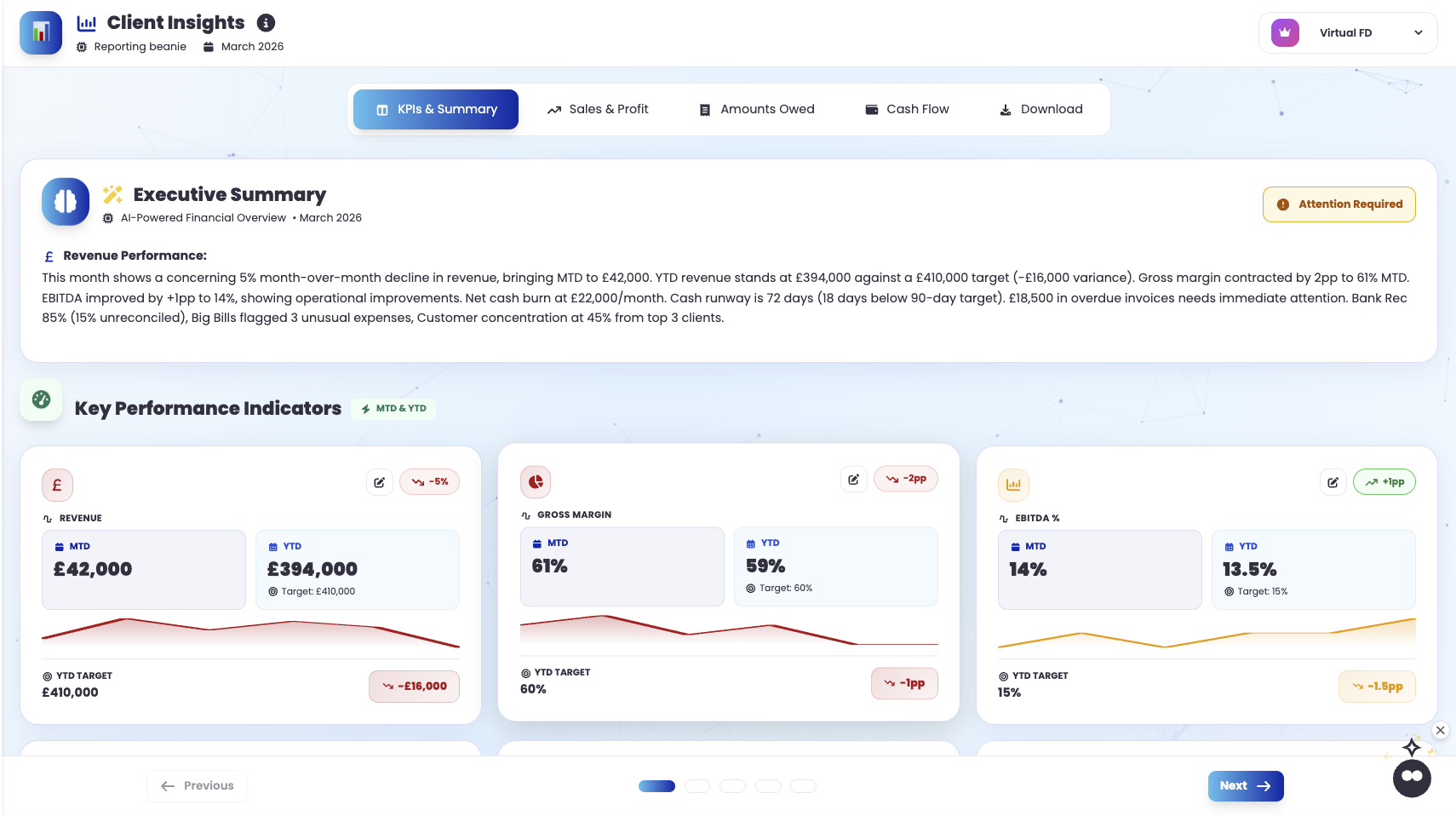
This belief is exactly why we built the beanieverse — not as another disconnected tool to add to your tech stack, but as a centralised control centre designed to bring clarity and cohesion to the way your firm operates.
Rather than juggling multiple implementations, multiple logins and multiple costs, the beanieverse brings together the tools your firm needs to evolve within a single, structured ecosystem. It reduces manual handling, removes friction between systems and creates consistency across processes, allowing work to flow more smoothly and predictably.
The result is not just operational efficiency, but breathing space.
Less duplication.
Less unnecessary rework.
Less time anchored to outdated methods.
And more time focused on moving the firm forward with intention.
The Question That Matters
The question is no longer whether AI will shape the future of accounting — it already is. The more pressing question is how long any firm can afford to delay embracing it in a way that truly changes outcomes.
Because the firms that thrive over the next few years won’t be the ones that appear busiest. They will be the ones that operate with clarity and focus. The ones that stopped mistaking constant activity for meaningful progress. The ones that replaced manual grind with intelligent systems and chose outcomes over accumulating more software.
The future of accounting will not belong to firms that simply work harder.
It will belong to firms that work smarter — and give their people the freedom to do what they were trained to do in the first place.
And that begins by reclaiming the 30% that’s quietly slipping away.